H E B R E W  U N I V E R S I T Y  O F  J E R U S A L E M
The Robert H. Smith Faculty of Agriculture, Food and Environment

DEPARTMENT OF  ENTOMOLOGY

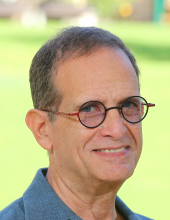
Moshe Coll, Ph.D.

Associate Professor of Insect Ecology


Department Of Entomology
The Robert H. Smith Faculty of Agriculture, Food and Environment
P.O Box 12, Rehovot 76100, ISRAEL

Tel: 972-8-9489153
Fax: 972-8-9466768
e-mail address: coll@agri.huji.ac.il


Research Areas:

  • Insect Ecology
  • Biological Control of Insect Pests
  • Integrated Pest Mamagement


Teaching:


Research Interests:

1-   Insect ecology, particularly complex trophic level interactions, and spatial dynamics of herbivores and their natural enemies;

2-   Habitat management for the conservation of insect biodiversity and the ecological services they provide;

3-   Ecological interactions of insects in managed and unmanaged habitats;

4-   Biological control of insect pests through conservation and augmentation of parasitoids and predators; and

5-   Integrated management of pest population with the use of environmentally-friendly control methods.


Selected Publications:

Coll M., L. Garcia de Mendoza and G.K. Roderick. 1994. Population structure of a predatory beetle: the importance of gene flow for intertrophic level interactions. Heredity 72: 228-236.


Coll M. and D.G. Bottrell. 1994. Effects of a nonhost plant on an insect herbivore in diverse habitats. Ecology 75: 723-731.


Coll M. 1996. Feeding and ovipositing on plants by an omnivorous insect predator. Oecologia 105: 214-220.


Coll M. and D.G. Bottrell. 1996. Movement of an insect parasitoid in simple and diverse plant assemblages. Ecological Entomology 21: 141-144.


Coll M. and S. Izraylevich. 1997. When predators also feed on plants: effects of competition and plant quality on omnivore-prey population dynamics. Annals of the Entomological Society of America 90: 155-161.


Coll M. and J.R. Ruberson (eds.) 1998. Predatory Heteroptera in agroecosystems: their ecology and use in biological control. Thomas Say Publications, Entomological Society of America. 233 pp.


Coll M. 1998. Parasitoids in diversified intercropped systems. 85-120. In C.H. Pickett & R. Bugg (eds.) Enhancing biological control: habitat management to promote natural enemies of agricultural pests. University of California Press, Berkeley, CA. 422 pp

Zhou X., O. Factor, S.W. Applebaum and M. Coll. 2000  Migration of Helicoverpa armigera (Hubner) in the eastern Mediterranean and east Africa, as indicated by RAPD analysis. Heredity 85: 251-256.

Coll M. and M. Guershon. 2002  Omnivory in terrestrial arthropods: mixing plant and prey diets. Annual Review of Entomology 47: 267-297.

Mulatu B., S.W. Applebaum and M. Coll. 2004. A recently acquired host plant provides an oligophagous insect herbivore with enemy-free space. Oikos 107: 231-238.

Groenteman R., M. Guershon and M. Coll. 2006.  Effects of leaf nitrogen content on oviposition site selection, offspring performance and intraspecific interactions in an omnivorous bug. Ecological Entomology 31: 155-161.

Bilu E., K.R. Hopper and M. Coll. 2006. Host choice by Aphidius colemani: effects of plants, plant-aphid combinations and the presence of intraguild predators. Ecological Entomology 31: 331-336.


Back to Faculty Members
Back to Entomology homepage
Page last updated: May 2007
                                                                                                 

 © All rights reserved to The Hebrew University of Jerusalem
